

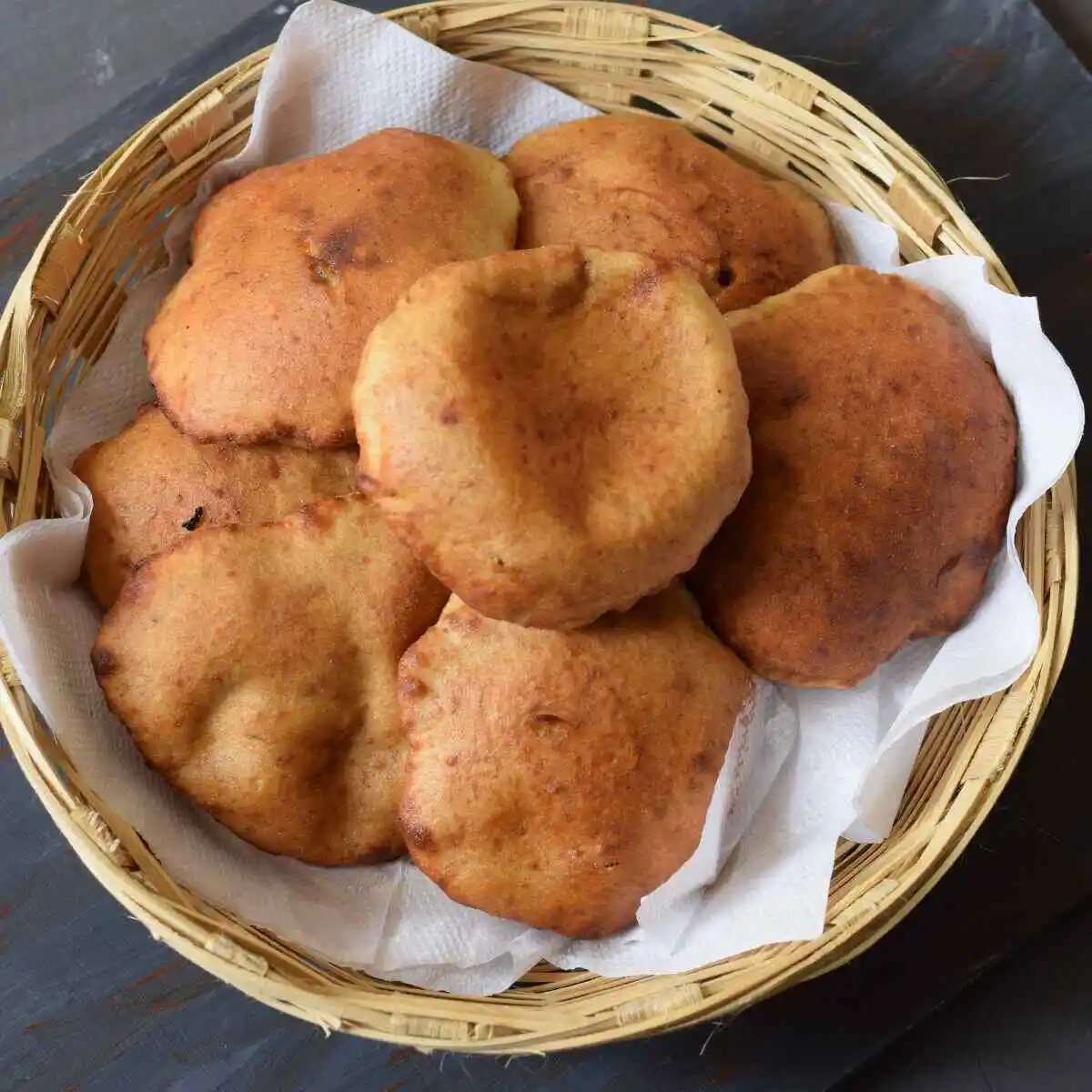
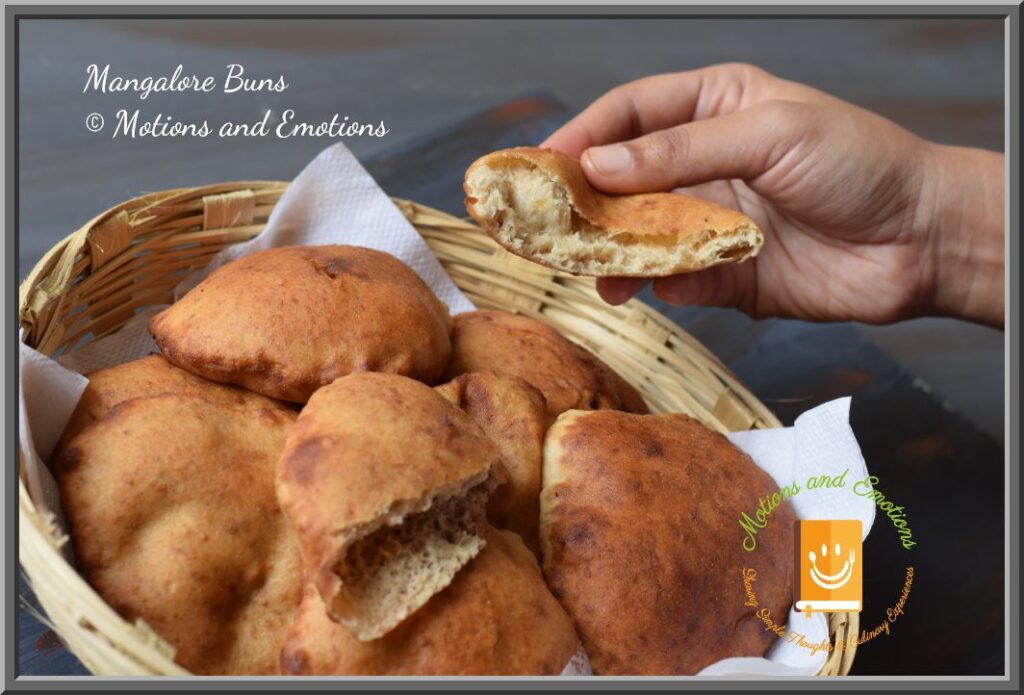
Mangalore Buns is a famous breakfast or teatime snack from coastal region of Karnataka (Udupi, Mangalore). Mangalore buns is also known as banana poori prepared using all-purpose flour and overripe banana and deep fried in oil. Read this blogpost and learn how to make Mangalore Buns step-by-step.
India has many states and they have different cultures! Once you move from one state to another everything you found to be new and along with that each state has it's specialty on food which you get as a bonus. As we are residing in Karnataka for more than a decade, we explored plenty of food options here and many became our favorites too.
Coastal region of Karnataka especially Mangalore and Udupi have plenty of food choices for vegetarians as well as non-vegetarians. Few years back we visited Kundapur to attend marriage of my husband's friend and really, liked the place very much.
We tried local vegetarian cuisine of Mangalore during marriage as well as some non-veg delicacies like chicken and prawn ghee roast in restaurant. We would love revisit the place to explore more.
After coming back to Bangalore the newly wed couple invited us. The girl prepared superb dishes and we relished them. She started with a famous snack, Mangalore Buns which I ate this for the first time and could not resist myself and finally ask the recipe before leaving their house. The recipe calls for overripe bananas.
What are the ingredients you need to prepare Mangalore Buns?
You don't need long list of ingredients to prepare Mangalore buns. Simple ingredients available in our kitchen pantry is used to bake this special Mangalore buns.
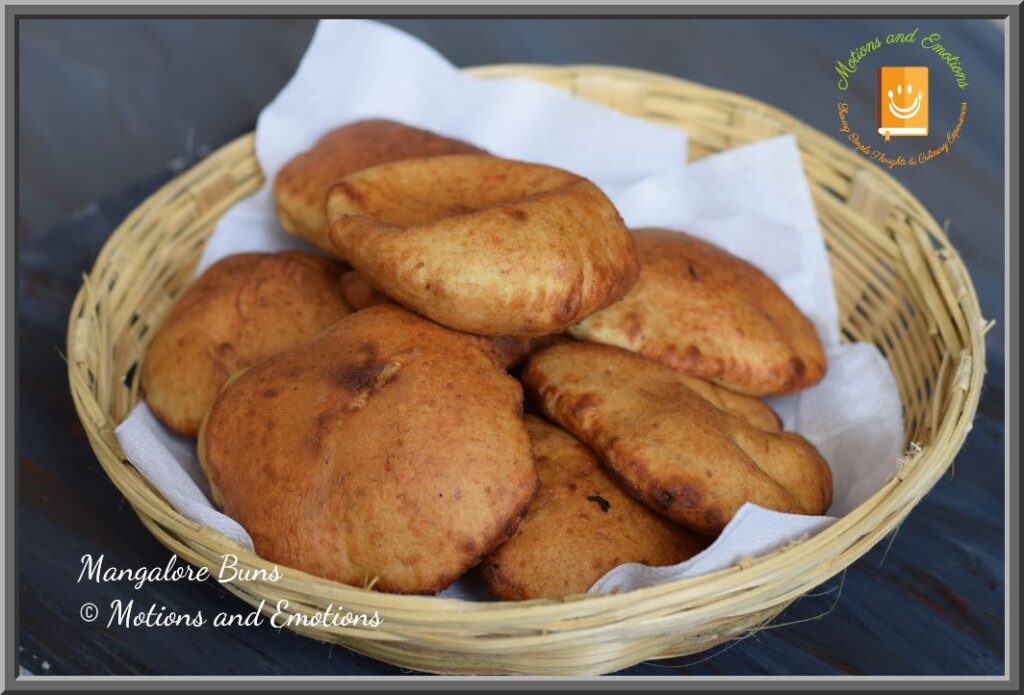
Overripe bananas are must for this dish. Flour is another major ingredient of this recipe. Apart from these two ingredient, you need curd, baking soda, sugar, pinch of salt and oil for deep frying the banana pooris.
Can I replace all-purpose flour with whole wheat flour in this recipe?
Yes, you can replace it with whole wheat flour. The recipe calls for all-purpose flour as it is light and gives a fluffy bread like texture to the pooris for which they are called as buns. Recently, I got a query from one of my reader who asked whether she could replace it with whole wheat flour.
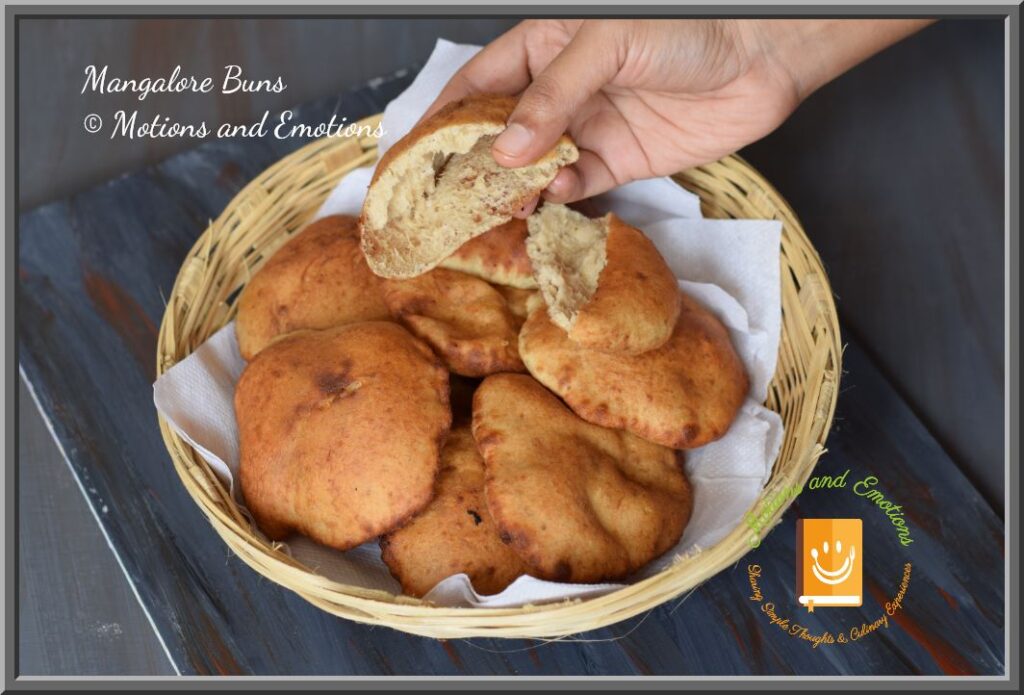
I replaced with whole wheat flour and the result is amazing. These buns in the picture are made of whole wheat flour and they are equally good. As whole wheat flour is heavier, it might result in slightly dense texture and slightly lesser fluffiness.
Can I prepare the dough of Mangalore Buns and store it in the refrigerator?
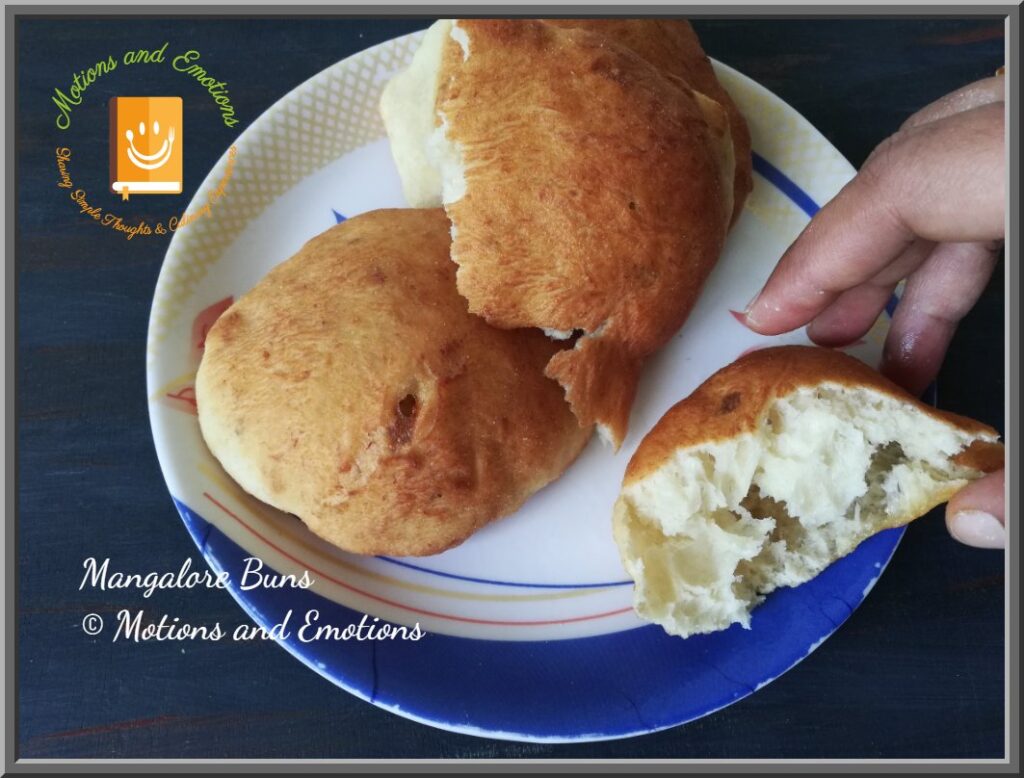
If you are planning to prepare Mangalore Buns as next morning breakfast, then prepare the dough in the evening and leave it in room temperature for overnight. You should allow to ferment the dough which results in bun like texture in your Mangalore buns.
When you rest the dough overnight (7 to 8 hours) it ferments and gives a super soft dough. If you put the dough in the refrigerator, it will not ferment, and you won't get the desired soft fluffy bun texture in your Mangalore buns.
Also, during winter days, it might take longer time for fermentation than summer days. So try to keep the dough in a warmer place (like inside microwave) during cold days for better fermentation.
How to serve Mangalore Buns?
Mangalore buns are normally served with coconut chutney or sambar. You can also serve it with aloo palya or vegetable kurma. As the banana pooris are slightly sweet in taste I prefer to have them without any accompaniment just like that.
How to roll Mangalore Buns?
Though Mangalore buns look alike poori but you have to divide the dough in bigger size balls and roll them little thicker (approximately 1/2 to quarter cm). This helps to create the bun like texture inside the pooris.
More Banana Recipes
Banana Bread with Chocolate Chips
Mangalore Buns | Banana Poori
Materials
- 1½ cup All-purpose flour or Whole wheat flour
- 1 no Overripe Banana, Big
- 2 tablespoon Curd
- 2-3 tablespoon Sugar
- ¼ teaspoon Baking Soda
- Salt to taste
- 2 cups Vegetable Oil for deep frying
Instructions
- Take overripe banana in a bowl and use a fork to smash it and make sure it should not contain any lumps.
- Later add curd and sugar and blend once again.
- Sieve the flour along with salt and baking soda. Add the blended mixture into it and prepare a smooth dough. Do not add any water. If the dough becomes very sticky you can add little more flour in that.
- Now cover the dough with a damp cloth and keep in room temperature. Allow to rest it for 7 to 8 hours. So, if you want to prepare it for breakfast, make the dough previous night.
- After 7 to 8 hours, knead the dough once again and divide into equal lemon size balls.
- Take each ball dust with flour and roll out small discs like poori but it must be thick.
- Heat oil in a wok and deep fry both sides until golden and serve hot.
PIN to read it later!
Also find us on:
Facebook | | Pinterest | Twitter | Instagram
If you are trying any of our recipes, we would love to see the pictures of your dishes. Tag us in any of our Social Media Handles or use #motionsandemotions. You can also send us your feedback and pictures at: jhumu.here@gmail.com or motionsemotions.here@gmail.com


Seema Sriram
Being married to one raised in the Mangalore region these buns happens so often in the house. We deliberately save up the bananas to overripe so we can work through these buns!!
Jagruti's Cooking Odyssey
These Mangalore buns or banana poori are just to die for, what a delicious way to use leftover ripe bananas. So similar to our east-African Mandazi.
Priya Srinivasan
Mangalore buns look super tempting and inviting! A delicious way to use up ripened bananas. I love mine with a potato curry! Scrumptious!
Pavani
Wow, such soft, fluffy and delicious looking Mangalore buns. Love that you used whole wheat flour to make them. Would love to try this recipe soon.
Uma Srinivas
Mangalore buns are always favorite to me because it's my hometown recipe. We enjoy this with chutney and a cup of coffee.
Vandana
Loved this recipe. I am hearing about Manglore buns for the first time but now really tempted to try them. Thank you for sharing this amazing recipe.
hem lata srivastava
Simply awesome I was looking for the recipe, these mangalore buns looks so delicious Thanks for sharing such a wonderful dish saving it.
Bless my food by Payal
This is always hard to decide where to use overripe bananas, and they usually end up in cake or muffins. This is for sure a unique recipe for me, being North Indian. Thanks for sharing.
angiesrecipes
These are new to me and certainly look very inviting and tasty.
Mayuri Patel
Love Mangalore Buns and aren't as sweet as one would presume. We love to have them with either masala tea for breakfast or with aloo sabji as part of the main meal. And it is a good way to use up over ripe bananas.